- 6 interviews
- 10 usability tests
- 20+ screens
- 4 weeks with a UI designer
- Role
- UX specialist paired with a UI designer
- Methods
- Desk research, IDIs, usability testing, UX/UI design
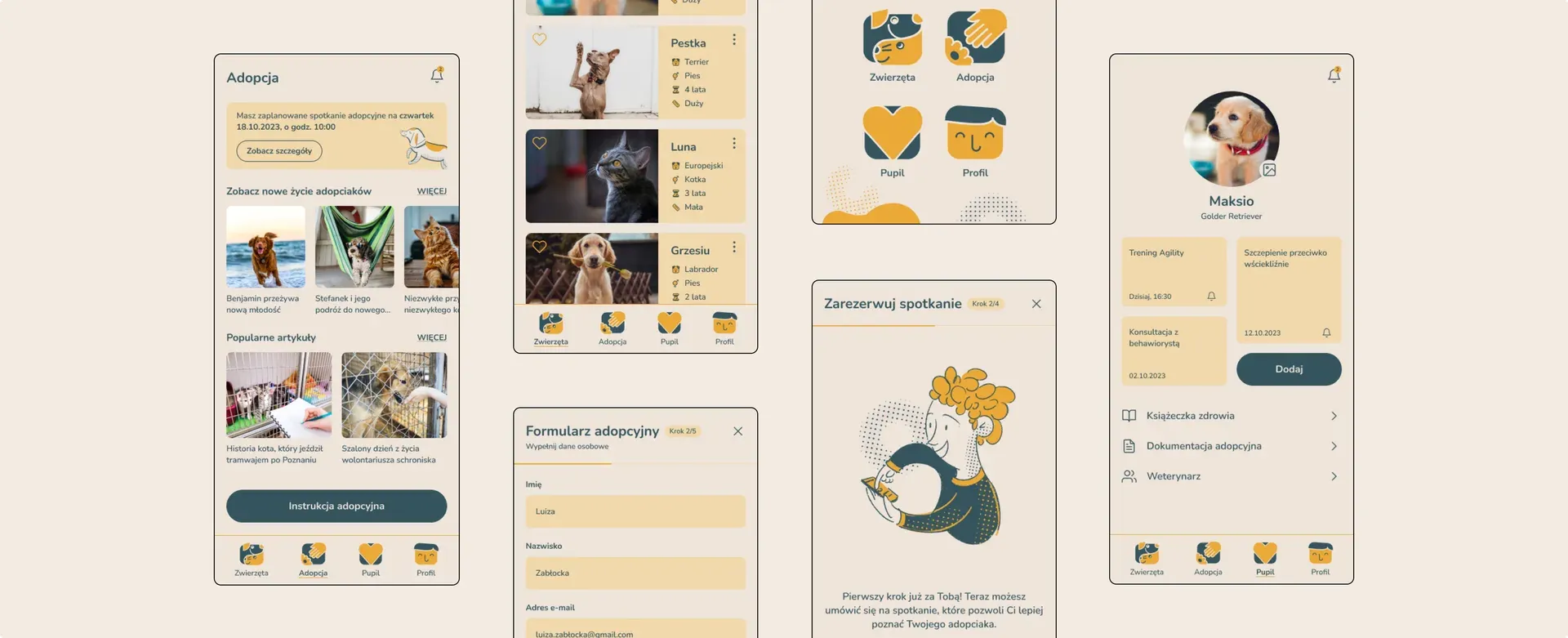
A concept app supporting shelter pet adoption — grounded in shelter volunteer experience and designed together with a graphic designer. From interviews through two rounds of testing to a hi-fi prototype.
Working as volunteers at the animal shelter gave us a firsthand sense of what the staff and the animals are up against. The main factor holding the shelter back is the sheer number of homeless animals. So it matters to increase successful adoptions and reduce the animals that get returned.
It is necessary to understand those who are interested in adopting a pet and those who are currently caring for a pet that they got from a shelter.
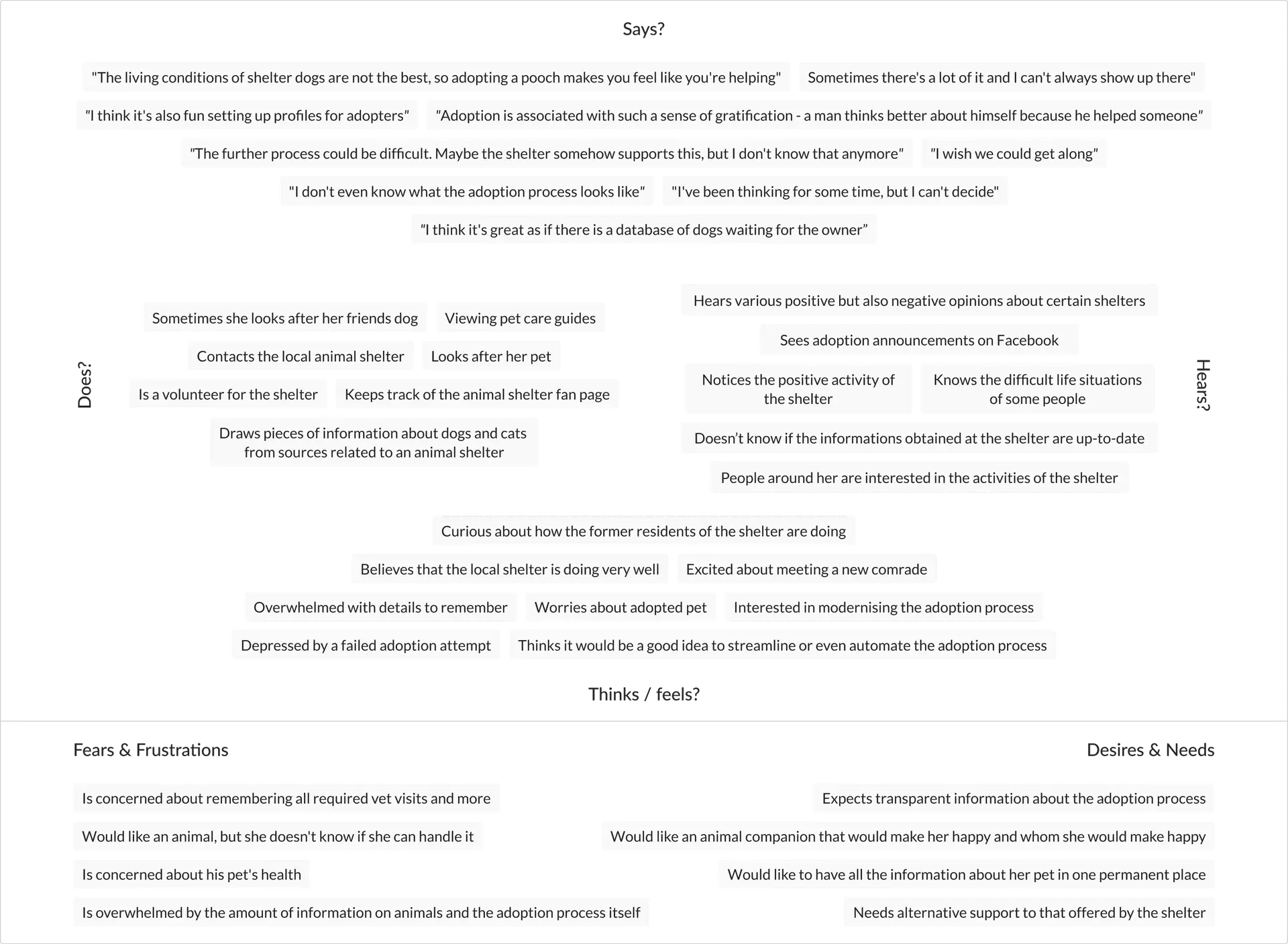
To better understand our target users, we recruited 6 people and ran interviews lasting 30 to 60 minutes. We categorised the data with the empathy map technique, which gave us a high-level picture of their emotions, fears, and needs.
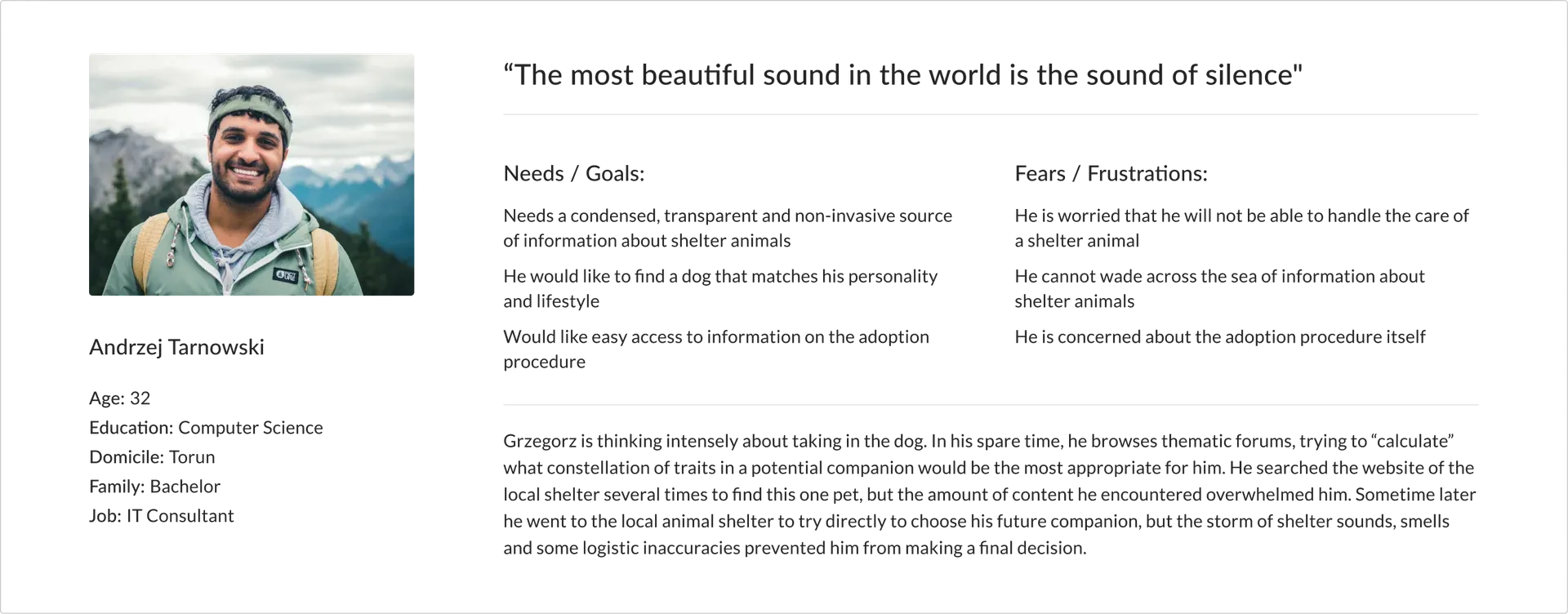
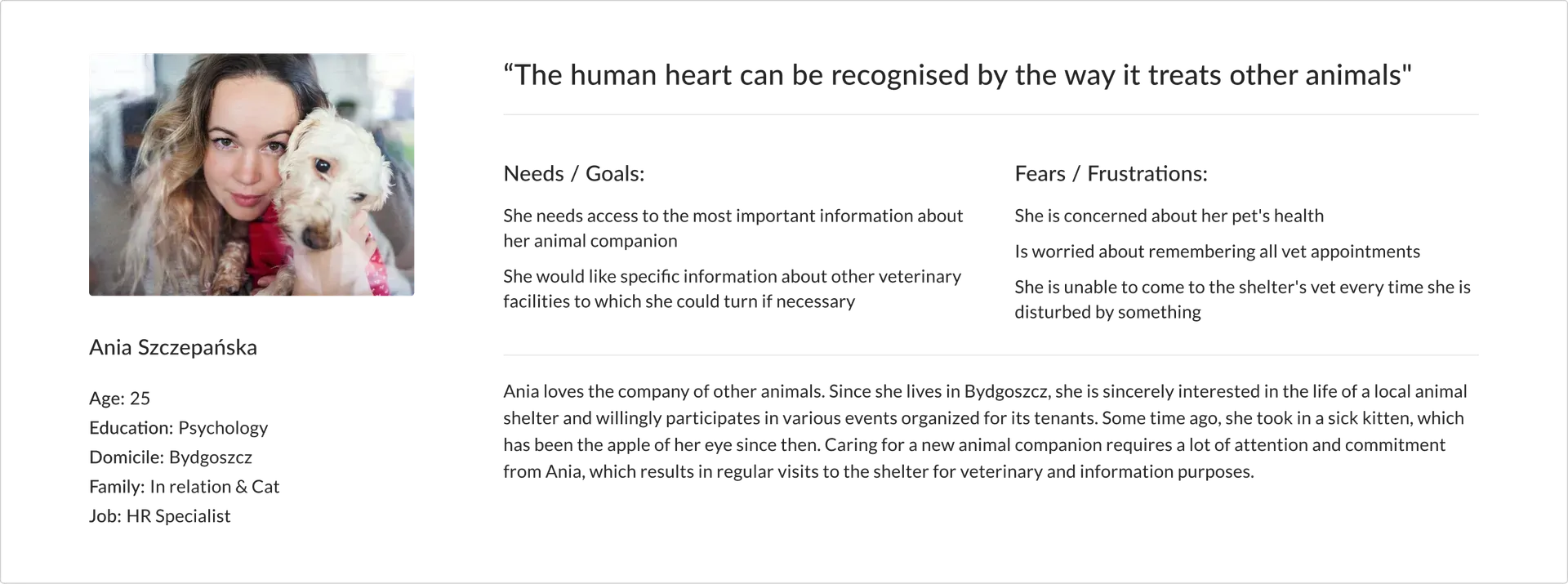
The obtained data allowed us to create hypothetical user archetypes. We distinguished two main personas towards whom we directed further design work.
An analysis of the various stages of the user experience allowed us to identify areas with potential for improvements.
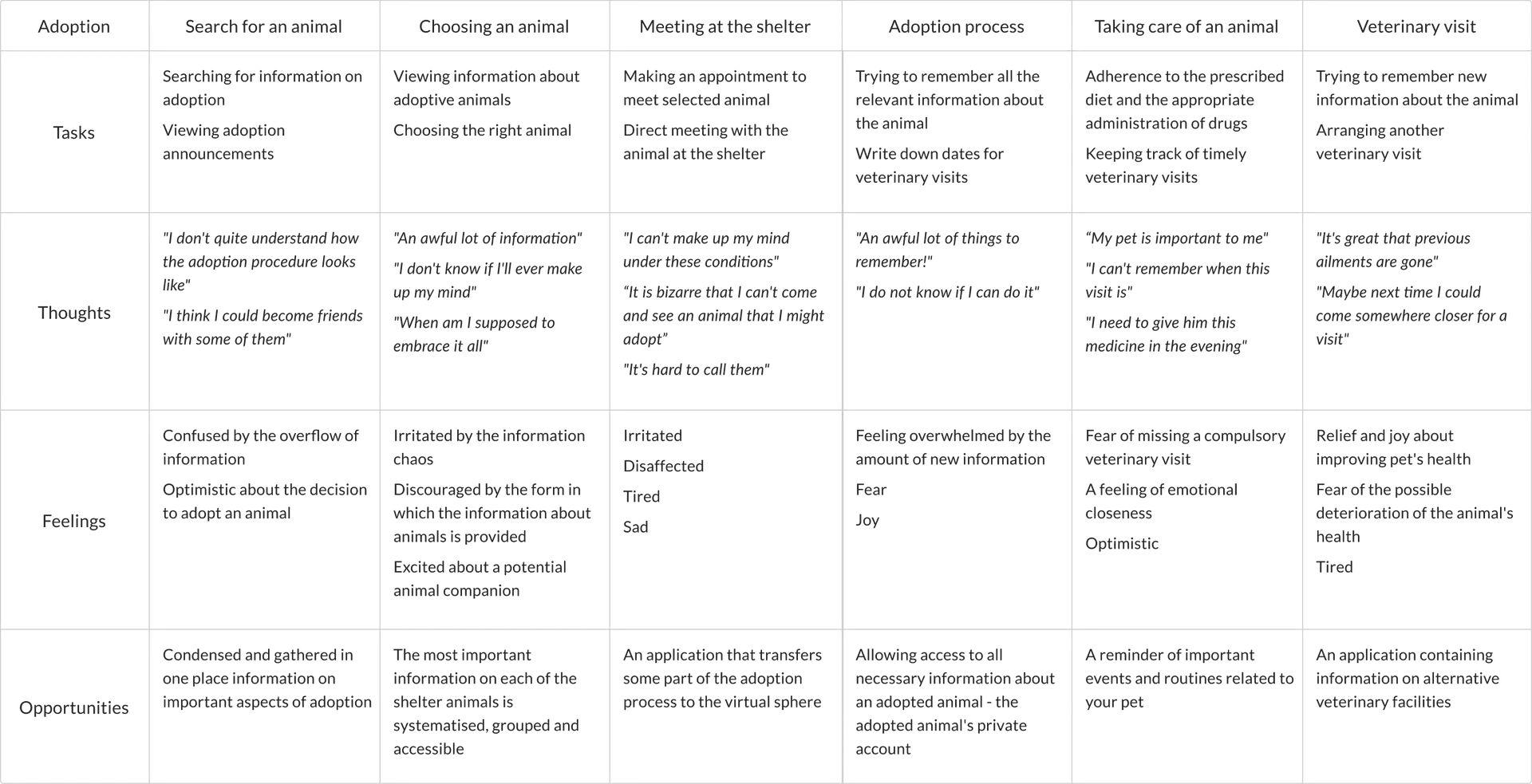
After tracing the journeys of archetypal users, it became possible to define design problems and outline their potential solutions. Based on the materials we created, we concluded that this product should meet the following goals:
Makes the pre-adoption research phase smoother for prospective adopters.
Dispels procedural uncertainty and shields adopters from red-tape anxiety.
Supports new carers through the first months of life with a shelter animal.
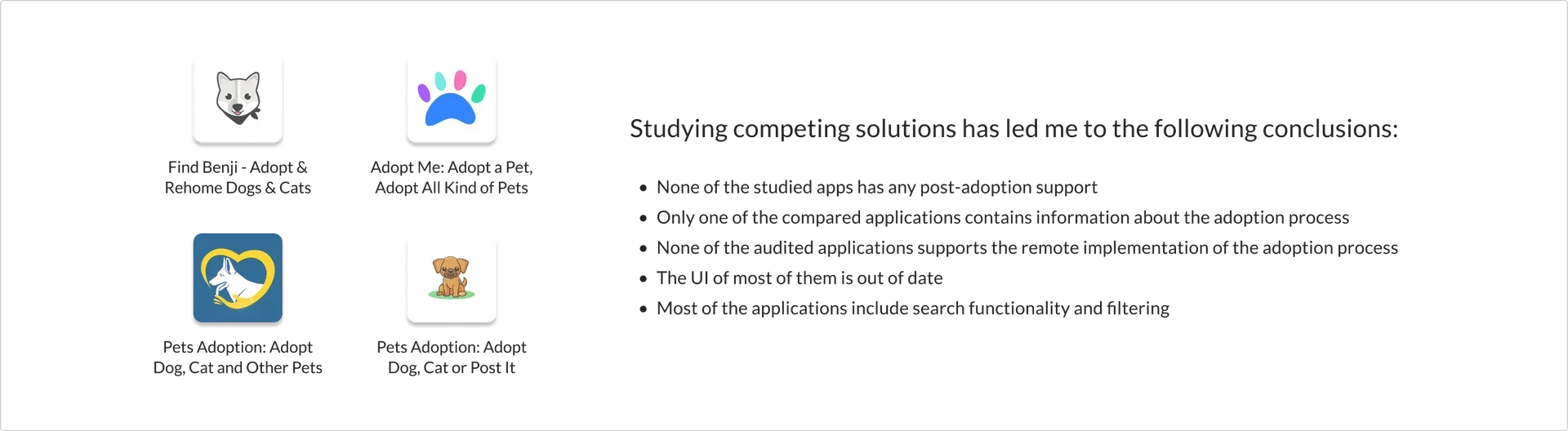
Looking for a conceptual point of reference, we audited other products. This helped us identify approaches and design patterns currently functioning in the digital space.
Rephrasing identified design problems into simple questions starting with “How might we...?” allowed us to look at the challenges ahead from a fresh, more creative perspective.
HMW prevent new shelter animal keepers from needing additional information support?
HMW make the adoption procedure simple, easy to understand and not deter potential caregivers?
HMW provide access to critical information about adopted animals to those who need it?
HMW design a shelter animal viewer that encourages exploration, is understandable and transparent?
HMW make the exploration of a potential animal companion exciting?
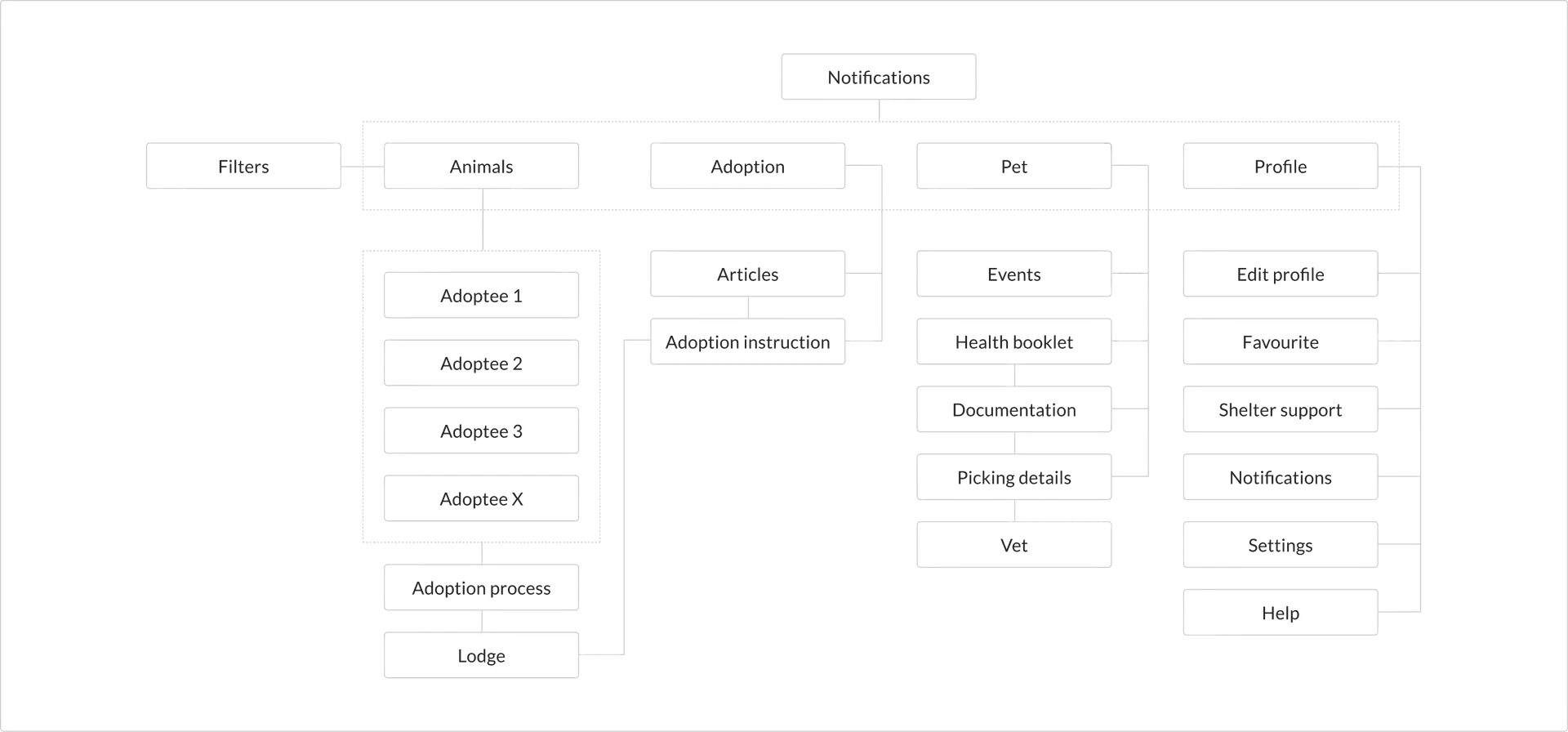
With the gathered knowledge, we were able to create a simple structure for our product.
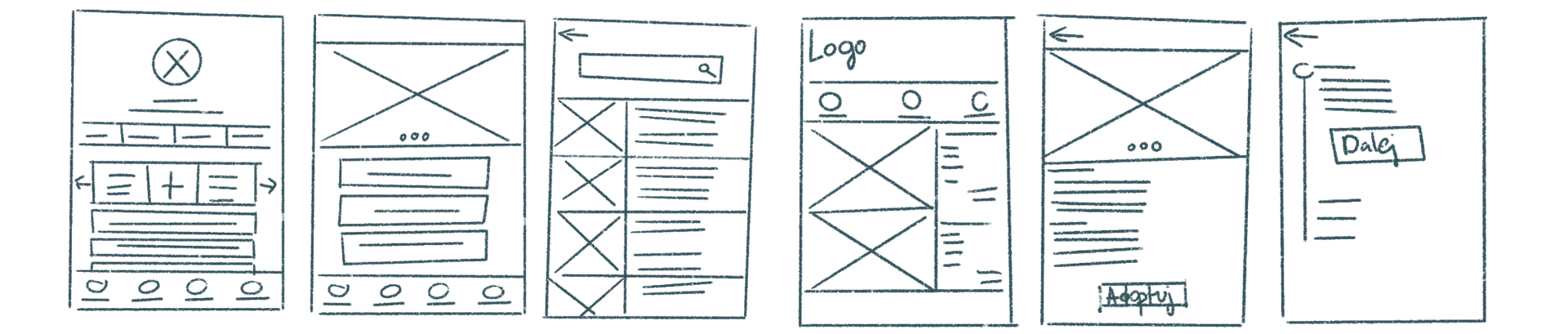
Initial sketches were made on paper, and when they began to reflect what we wanted to show, we transferred them into a digital format.
After transforming screens into lo-fi interactive prototypes, we checked them during a semi-structured usability study.
We invited 5 people to moderated usability tests. Participants went through tasks covering finding an adoptive animal, going through the adoption process, and locating various types of information. They also completed the System Usability Scale.
Most of the people complained about the lack of direct access to their own profiles.
Some testers noted a problem with distinguishing gender symbols in filters.
The analysis of the SUS results showed a very good overall attitude towards the tested product.
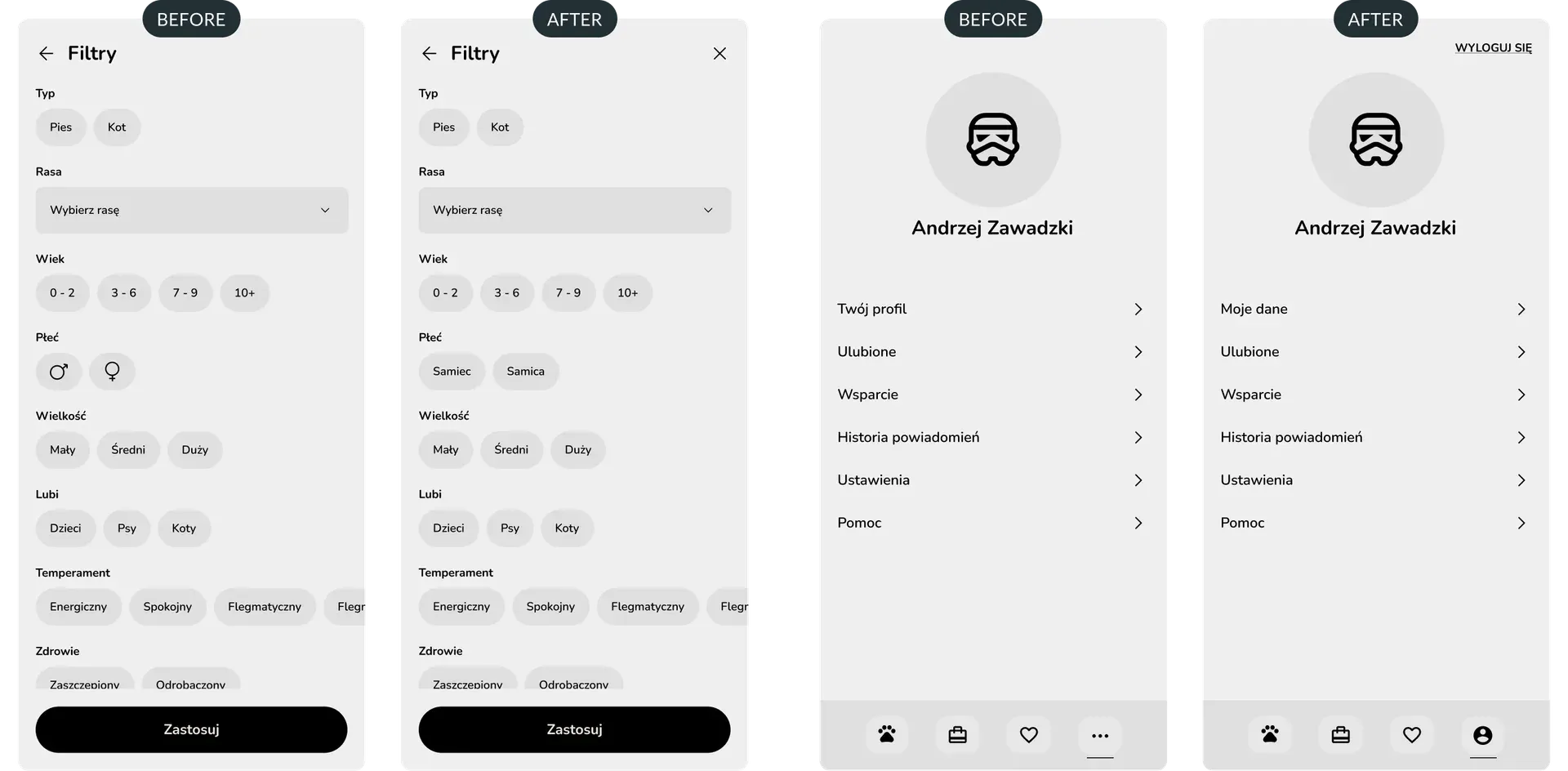
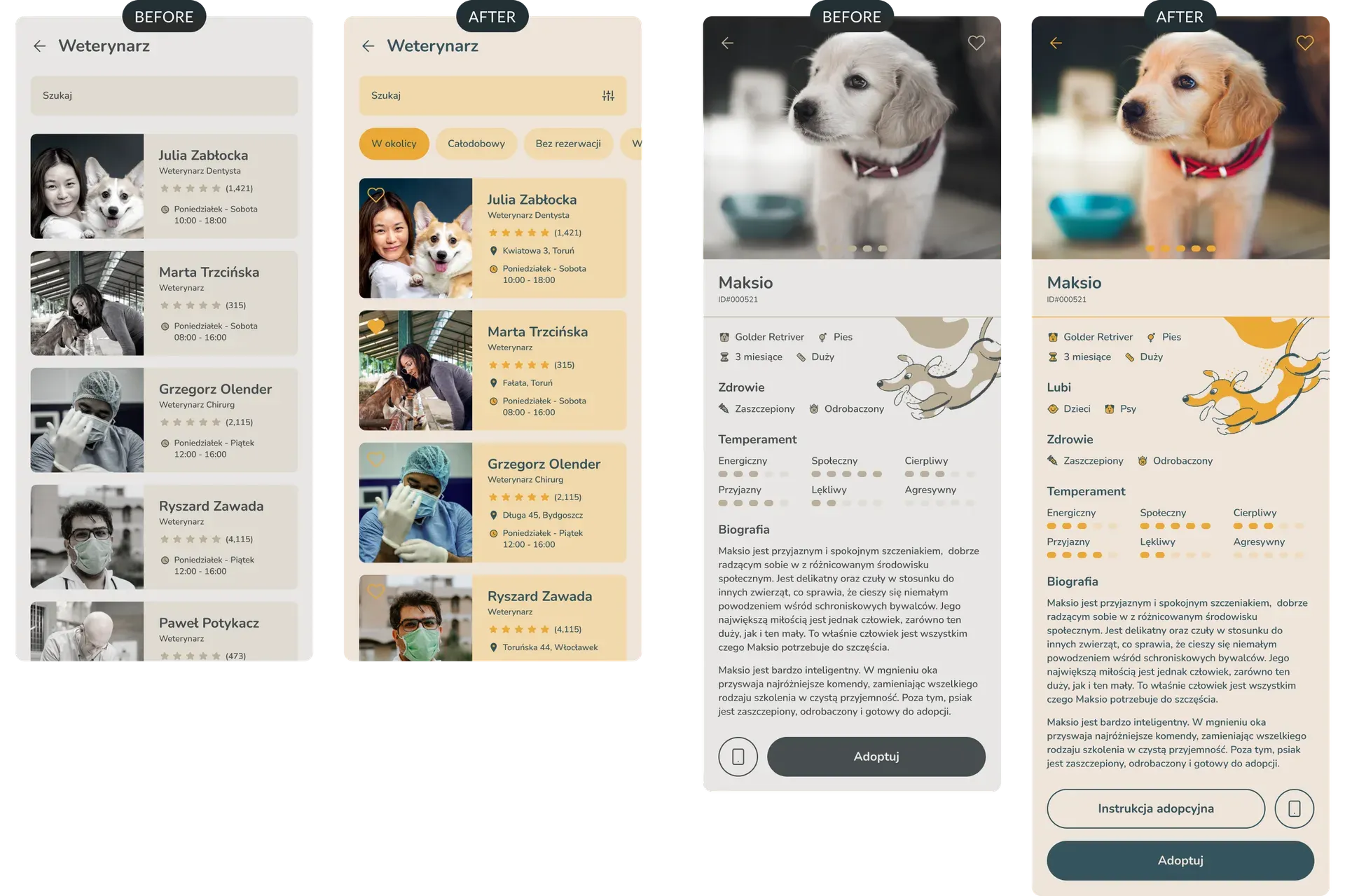
To test the hi-fi prototype, we ran another round of a semi-structured usability study.
Most of the participants had a problem with the contrast of minor graphic elements.
Most people looked for information about the adoption process in the wrong place.
Several participants mentioned that the most important information about a vet is its location.
Testers mentioned that it would be helpful to have fast filtering functions in case of emergency.
Testers mentioned the usefulness of the favourite function in the vet space.
It was pointed out that there are no filters that define the attitude of the adoptive animal towards other dogs, cats, and children.
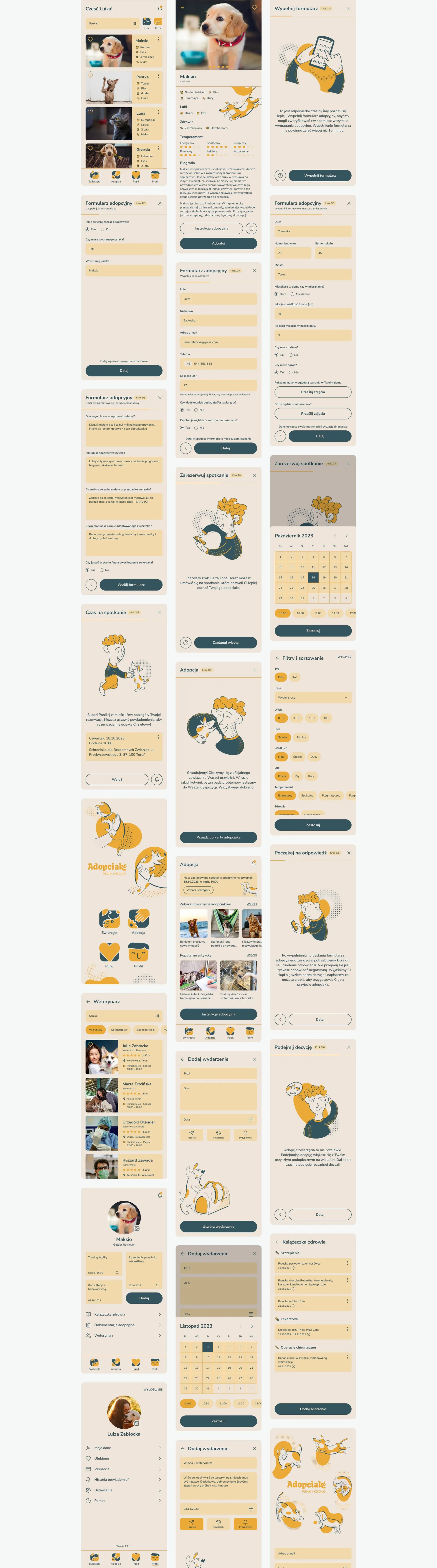
After many iterations and an enormous amount of work, we brought the „Adopciak” project to its final version.
Volunteering at the shelter before the project began turned out to be our biggest advantage – it gave us domain knowledge that no desk research could replace. Conversations with staff and first-hand observation of how adoptions work shaped our interview questions and helped us spot real pain points faster. This project taught me how much a designer's understanding of the problem space affects the quality of every decision downstream.
It was also my first time collaborating with another designer. Splitting responsibilities – I owned research, flows, and testing while my partner focused on visual design – taught me how important it is to maintain a shared understanding of user needs across roles. The personas and journey map became our common reference point whenever we disagreed on direction.
I would spend more time mapping user flows before jumping into wireframes. In the second usability study, participants looked for adoption process information in the wrong place – a problem that likely stemmed from insufficient work on information architecture early on.